TopBottom
Announcement: wanna exchange links? contact me at smallarea@hotmail.com.

What's the incubation term for swine flu(H1N1)?

Posted by smallarea at
Share this post:
Ma.gnolia DiggIt! Del.icio.us Yahoo Furl Technorati Reddit

According to the Health Protection Agency, the incubation period for swine flu (H1N1) (Time between infection and appearance of symptoms) can be up to 7 days, but is most likely to be between 2 and 5 days. It is, however, too early to be able to provide details on virus characteristics, including incubation term, with absolute certainty at now.

How is swine flu infection diagnosed?

Posted by smallarea at
Share this post:
Ma.gnolia DiggIt! Del.icio.us Yahoo Furl Technorati Reddit

Diagnosis of swine flu (H1N1) is now based on an assessment of the person's symptoms, rather than having to wait for a swab test result. Health professionals will continue to test some sick people to ensure they keep getting up-to-date information about the New flu virus.

Is the new swine flu virus contagious?

Posted by smallarea at
Share this post:
Ma.gnolia DiggIt! Del.icio.us Yahoo Furl Technorati Reddit

The Health Protection Agency (HPA) says the new swine flu virus is highly contagious and is spreading from person to person.
Swine flu scatters in the same way as ordinary colds and flu.
The virus is scatter through the droplets that come out of the mouth and nose when someone sneezes or coughs.
If someone sneezes or coughs or and they don't cover it, those droplets to be able to scatter about 1 metre. If you're close to the someone you might breathe them in.

Or, if someone sneezes or coughs into their hands, those droplets and the virus within them are easily transferred to surfaces that the person catches, such as door handles, hand rails, telephones and keyboards. If you catch these surfaces and catch your face, the virus are able to enter your system, and you can become infected.

H1N1 Flu (Swine Flu)

Posted by smallarea at
Share this post:
Ma.gnolia DiggIt! Del.icio.us Yahoo Furl Technorati Reddit

H1N1 Flu (Swine Flu)

Also called: Swine flu

Swine flu is an infection caused by a virus. It's named for a virus that pigs can get. People do not normally get swine flu, but human infections can and do happen. The virus is contagious and can spread from human to human. Symptoms of swine flu in people are similar to the symptoms of regular human flu and include fever, cough, sore throat, body aches, headache, chills and fatigue.
There are antiviral medicines you can take to prevent or treat swine flu. There is no vaccine available right now to protect against swine flu. You can help prevent the spread of germs that cause respiratory illnesses like influenza by

- Covering your nose and mouth with a tissue when you cough or sneeze. Throw the tissue in the trash after you use it.

- Washing your hands often with soap and water, especially after you cough or sneeze. You can also use alcohol-based hand cleaners.

- Avoiding touching your eyes, nose or mouth. Germs spread this way.

- Trying to avoid close contact with sick people.

- Staying home from work or school if you are sick.

How bad is swine flu? Without numbers, who knows?

Posted by smallarea at
Share this post:
Ma.gnolia DiggIt! Del.icio.us Yahoo Furl Technorati Reddit

WASHINGTON (Reuters) - Many people are confused about just how many patients have been infected with the new H1N1 flu, which in turn makes it hard to tell how bad the pandemic is, British researchers said on Tuesday.

But better methods of measuring the swine flu toll in real-time could help reduce some of that confusion, according to the team at Imperial College London.

And without this information, they said, governments are operating in the dark when assessing what their response should be.

"If you don't test people, you don't know how many people are out there who have it," Dr. Tini Garske, an expert in disease modeling who led the study, said in a telephone interview. "The number of confirmed cases doesn't tell you a lot."

The World Health Organization has confirmed 94,512 cases globally and 429 deaths from the new H1N1 swine flu, which was declared a pandemic last month.

But these numbers represent only a fraction of the real cases -- the U.S. Centers for Disease Control and Prevention says at least a million people have been infected and the virus is spreading out of control.

Most countries are now only testing a sample of patients, and many people who become infected are not ill enough to even seek medical attention, let alone get tested.

Diagnostic kits for H1N1 are expensive, and most governments save them for when they are really needed.

But if no one knows just how many people are infected overall, with serious disease and with mild disease, how can anyone say how severe the pandemic is?

DEATH RATES

Writing in the British Medical Journal, Garske and colleagues said current case fatality ratios -- the number of deaths from swine flu divided by the total number of cases -- is only around 0.5 percent. This is similar to the death rate from seasonal influenza, which kills anywhere between 250,000 and 500,000 people globally each year.

But Garske noted this varies greatly from country to country. Unlike seasonal flu, influenza H1N1 is causing severe illness in previously healthy young adults and children.

"Accurately predicting the severity of this swine flu pandemic is a very tricky business, and our research shows that this can only be achieved if data is collected according to well-designed study protocols and analyzed in a more sophisticated way than is frequently being performed at present," Garske said.

"If we fail to get an accurate prediction of severity, we will not be providing healthcare planners, doctors and nurses, with the information that they need to ensure they are best prepared to fight the pandemic as we head into the flu season this autumn."

Garske's team outlined ways to improve estimates, including using individual towns as examples.

What do you want to know about swine flu?

Posted by smallarea at
Share this post:
Ma.gnolia DiggIt! Del.icio.us Yahoo Furl Technorati Reddit

The reality is now setting in that the current outbreaks of H1N1 or “swine flu” is not just any flu but a pandemic that is spreading rapidly. What’s really worrying the authorities is that in many affected countries, “flu season” is just around the corner — so we are yet to see the worst of it.
The logistics of the pandemic – how many people have been infected, which age groups have been worse hit – are one thing. The other is the message itself. Governments and health authorities don’t want to scare people unnecessarily about the risks — but they don’t want people to be complacent either.

This point has been summed up by a debate here in the UK. Parents have been told that we are in the early stages of pandemic and that the current form of swine flu is relatively mild and can usually be treated successfully with anti-virals, of which the UK is well-stocked.

But that has prompted some parents to consider exposing their children to the virus now, before it mutates into something more threatening, even organizing “swine flu parties” at which youngsters can catch H1N1. It is something UK health authorities have strongly advised against – but it has left parents feeling that they are receiving conflicting advice about the seriousness of the threat.

The problem is that the right advice for each individual relies on that individual’s circumstances – where you live, how you live, who you live around and how well prepared your healthcare system is.

Connects, as always, values your responses and comments. Thanks to those of you who have taken the time to send us your opinions, we really enjoy reading your thoughts and using them on the programme.

That’s why we are asking you today what you want to know about H1N1. We’ll be putting your questions to a preeminent doctor and expert in the subject who will try to answer your queries. Whatever question you have, whether it’s on the nature of the virus or how best to protect your children, please send them below for today’s edition of Connect the World.

CNN

How to get healthy

Posted by smallarea at
Share this post:
Ma.gnolia DiggIt! Del.icio.us Yahoo Furl Technorati Reddit

How I did it: Found all new doctors and started over. Thyroid problems if monitored properly should only be a 3-6 months thing. Not every month because I feel bad. New doctor has nailed it and my levels have been great for over 3 months.
As far as the OCD, just like I take my medication everyday, I need to take my diet and exercise everyday. You wouldnt stop one, you certainly cant stop all of it. Sure there are days when I cant do yoga, so I meditate instead. There will always be problems, but I have never felt better. Its all about priorities. What is important to me? How I feel everyday was very high on that list.

Lessons & tips: Find doctors that listen to you. I went through 4 psychiatrists before this one. If a doctor is willing to give you med after med after med without looking into solving the problem, thats a red flag. If your doctor isnt willing to discuss diet and exercise, thats a red flag too. People have become so sensitive over this stuff, they refuse to believe smoking, food and no activity could possibly be part of the problem.
Move. Move, move, move. Its scientific that moving helps your body create hormones that make you feel better. Dont believe me, try it. As someone who couldnt get out of bed to someone who walks at a local park, does yoga and is getting back in to society again, it works. I am also off 2 of my medications! And dont forget 50lbs down.
Im saving extra money a month on saved copays, medications and eating less and better.

Resources: My doctors, the ones that finally listen and believe that meds cannot solve everything. Bravery. Its hard to get up and get going, I KNOW this. But once you do you will feel so much better.
Still looking for someone or something to help with cholesterol. All this weight gone, working out and eating better and it STILL hasnt moved more than 3 points...ugh.

Links

Emergency Warning Signs

Posted by smallarea at
Share this post:
Ma.gnolia DiggIt! Del.icio.us Yahoo Furl Technorati Reddit

Seek emergency medical care if you or someone you know is having any of following warning signs discussed below.

In children, emergency warning signs that need urgent medical attention include:

- Fast breathing or trouble breathing
- Bluish skin color
- Not drinking enough fluids
- Not waking up or not interacting
- Being so irritable that the child does not want to be held
- Flu-like symptoms improve but then return with fever and worse cough
- Fever with a rash

In adults, emergency warning signs that need urgent medical attention include:

- Difficulty breathing or shortness of breath
- Pain or pressure in the chest or abdomen
- Sudden dizziness
- Confusion
- Severe or persistent vomiting

Seek emergency medical care if you or someone you know is experiencing any of the signs above.

Flu Symptoms

Posted by smallarea at
Share this post:
Ma.gnolia DiggIt! Del.icio.us Yahoo Furl Technorati Reddit

The flu is a contagious respiratory illness caused by influenza viruses. It can cause mild to severe illness, and at times can lead to death.

Symptoms of flu include:

- fever (usually high)
- headache
- extreme tiredness
- dry cough
- sore throat
- runny or stuffy nose
- muscle aches
- Stomach symptoms, such as nausea, vomiting, and diarrhea, also can occur but are more common in children than adults.

While getting a flu vaccine each year is the best way to protect against flu, influenza antiviral medicines can fight against influenza, offering a second line of defense against the flu.

Antiviral Medicines

Posted by smallarea at
Share this post:
Ma.gnolia DiggIt! Del.icio.us Yahoo Furl Technorati Reddit

Antiviral Medicines

Antiviral medicines are an important second line of defense against the flu.

If you do get the flu, antiviral medicines are an important treatment option. (They are not a substitute for vaccination.)

Antiviral medicines are prescription medicines (pills, liquid or an inhaler) that fight against the flu by keeping flu viruses from reproducing in your body.
Antiviral mediciness can make your illness milder and make you feel better faster.

They may also prevent serious flu complications. This could be especially important for people at high risk.For treatment, antiviral medicines work best if started soon after getting sick (within 2 days of symptoms).

There are four flu antiviral medicines approved for use in the United States. CDC has issued interim guidance on which antiviral medicines to use during the 2008-09 flu season: The four antiviral medicines are:

Oseltamivir is approved to both treat and prevent influenza A and B virus infection in people one year of age and older.

Zanamivir is approved to treat influenza A and B virus infection in people 7 years and older and to prevent influenza A and B virus infection in people 5 years and older.

Amantadine is approved to treat and prevent only influenza A viruses in people older than 1 year.

Rimantadine is approved to prevent only influenza A virus infection among people older than 1 year.

It is approved to treat only influenza A virus infections in people 13 and older.
Antiviral medicines differ in terms of who can take them, how they are given, their dose (which can vary depending on a person’s age or medical conditions), and side effects.

For more information, see “Information for Health Care Professionals: Using Antiviral Agents for Seasonal Influenza” or consult the package insert for each medicines. Your doctor can help decide whether you should take an antiviral medicines this flu season and which one you should use.

If you get sick H1N1

Posted by smallarea at
Share this post:
Ma.gnolia DiggIt! Del.icio.us Yahoo Furl Technorati Reddit

If you get sick Swine flu( H1N1)

Most healthy people recover from the flu without complications.

If you get the flu:
Stay home from work or school.
Get lots of rest, drink plenty of liquids, and avoid using alcohol and tobacco.
There are over-the-counter (OTC) medications to relieve the symptoms of the flu (but never give aspirin to children or teenagers who have flu-like symptoms, particularly fever).
Remember that serious illness from the flu is more likely in certain groups of people including people 65 and older, pregnant women, people with certain chronic medical conditions and young children.
Consult your doctor early on for the best treatment, but also be aware of emergency warning signs that require urgent medical attention.

A Pandemic Is Declared

Posted by smallarea at
Share this post:
Ma.gnolia DiggIt! Del.icio.us Yahoo Furl Technorati Reddit


On June 11, 2009, the World Health Organization (WHO) signaled that a global pandemic of novel influenza A (H1N1) was underway by raising the worldwide pandemic alert level to Phase 6. This action was a reflection of the spread of the new H1N1 virus, not the severity of illness caused by the virus. At the time, more than 70 countries had reported cases of novel influenza A (H1N1) infection and there were ongoing community level outbreaks of novel H1N1 in multiple parts of the world.

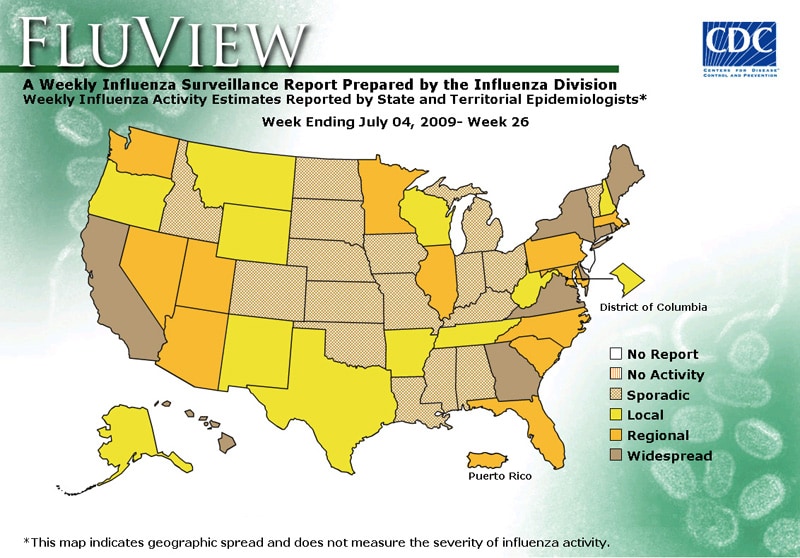
Since the WHO declaration of a pandemic, the new H1N1 virus has continued to spread, with the number of countries reporting cases of novel H1N1 nearly doubling. The Southern Hemisphere’s regular influenza season has begun and countries there are reporting that the new H1N1 virus is spreading and causing illness along with regular seasonal influenza viruses. In the United States, significant novel H1N1 illness has continued into the summer, with localized and in some cases intense outbreaks occurring. The United States continues to report the largest number of novel H1N1 cases of any country worldwide, however, most people who have become ill have recovered without requiring medical treatment.

Given ongoing novel H1N1 activity to date, CDC anticipates that there will be more cases, more hospitalizations and more deaths associated with this pandemic in the United States over the summer and into the fall and winter. The novel H1N1 virus, in conjunction with regular seasonal influenza viruses, poses the potential to cause significant illness with associated hospitalizations and deaths during the U.S. influenza season.

Swine Flu-Susceptible Population

Posted by smallarea at
Share this post:
Ma.gnolia DiggIt! Del.icio.us Yahoo Furl Technorati Reddit

Swine Flu-Susceptible Population

Though Mexico is relatively hot and humid year-round, it does have seasonal differences, Shaman noted. The dry season in México City runs from mid-December to about now.

"If this newly emerged virus developed or came into existence in México City during early March, the lower-humidity conditions then could still favor an outbreak" of swine flu, he said.

In addition, everyone may be susceptible to this H1N1 swine flu strain, because it's new. Such virulence would make an outbreak possible no matter what the climate, Shaman noted. Higher absolute humidity might only slow the swine flu's spread.

Georges Benjamin, executive director of the American Public Health Association, added that the new swine flu virus may "peter out as it gets warmer," especially now that we're at the end of the traditional flu season.

N.J. sets up swine flu hot line

Posted by smallarea at
Share this post:
Ma.gnolia DiggIt! Del.icio.us Yahoo Furl Technorati Reddit

New Jersey is setting up a hot line for residents worried about swine flu.

Health Commissioner Heather Howard will announce details about the call center this afternoon.

The state is still waiting for test results from five probable cases. They are expected back from the federal Center for Disease Control and Prevention today.

Meanwhile, additional cases of suspected swine flu have been submitted to the state lab for testing. State health officials caution that just because a doctor sends a specimen for testing doesn't mean it's a "probable" swine flu case.

The health department says all cases submitted to the state lab are tested within five to seven hours.

What is Swine flu ?

Posted by smallarea at
Share this post:
Ma.gnolia DiggIt! Del.icio.us Yahoo Furl Technorati Reddit


Caused by influenza type A virus, there are regular outbreaks among herds of pigs, where the disease causes high levels of illness but is rarely fatal.
It tends to spread in autumn and winter but can circulate all year round.

There are many different types of swine flu and like human flu, the infection is constantly changing.
Swine flu does not normally infect humans, although sporadic cases do occur usually in people who have had close contact with pigs.

There have also been rare documented cases of humans passing the infection to other humans.
Human to human transmission of swine flu thought to spread in the same way as seasonal flu – through coughing and sneezing.

The outbreak in Mexico seems to involve a new type of swine flu that contains DNA that is typically found in avian and human viruses.
The World Health Organization has confirmed at least some of the cases are caused by this new strain of H1N1.

"We are very, very concerned," World Health Organisation (WHO) spokesman Thomas Abraham said. "We have what appears to be a novel virus and it has spread from human to human... It's all hands on deck at the moment."
It is genetically different from the fully human H1N1 seasonal influenza virus that has been circulating globally for the past few years. It contains DNA that is typical to avian, swine and human viruses, including elements from European and Asian swine viruses
When any new strain of flu emerges that acquires the ability to pass from person to person, it is monitored very closely in case it has the potential to spark a pandemic.

The WHO is concerned but says it is too soon to change the threat level warning for a pandemic. However, it has convened an expert panel to consider whether to raise the alert level or issue travel advisories.

It might already be too late to contain the outbreak, a prominent US pandemic flu expert said.
Dr Michael Osterholm, a public health expert at the University of Minnesota, said given how quickly flu can spread around the globe, if these are the first signs of a pandemic, then there are probably cases incubating in other parts of the world already.

"Literally hundreds and thousands of travellers come in and out of Mexico City every day," Dr Osterholm said. "You'd have to believe there's been more unrecognised transmission that's occurred."
There is no vaccine that specifically protects against swine flu, and it was unclear how much protection current human flu vaccines might offer.

However, the CDC says two flu medicine, Tamiflu and Relenza, seem effective against the new strain. Roche, the maker of Tamiflu, said the company is prepared to immediately deploy a stockpile of the drug if requested.

Both medicines must be taken early, within a few days of the onset of symptoms, to be most effective. There have also been concerns that some forms of flu have been developing resistance to the medicines.
Scientists have long been concerned that a new flu virus could launch a worldwide pandemic of a killer disease.

A new pandemic flu virus could evolve when different flu viruses infect a pig, a person or a bird, mingling their genetic material. The resulting hybrid could spread quickly because people would have no natural defences against it.
The most notorious flu pandemic is thought to have killed at least 40 million people worldwide in 1918-19. Two other, less deadly flu pandemics struck in 1957 and 1968.

Thailand announces 80 new cases of swine flu

Posted by smallarea at
Share this post:
Ma.gnolia DiggIt! Del.icio.us Yahoo Furl Technorati Reddit


The Thai Health Ministry has confirmed 80 new cases of swine flu, most of them school age who contracted the virus in the capital Bangkok.
Dr Prat Boonyavongvirot, the Publich Health Ministry’s Permanent Secretary, says 68 of the cases were Thai primary and high school students and the rest were people who had been in contact with the students.

Prat said on Sunday none are in serious condition.

Prat also says authorities are not recommending that schools be closed, despite the virus’s spread among students.

The Public Health Ministry says 1,289 people in Thailand have contracted swine flu as of Sunday. Two people have died.

H1N1 swine flu hits young adults especially hard

Posted by smallarea at
Share this post:
Ma.gnolia DiggIt! Del.icio.us Yahoo Furl Technorati Reddit

Officials for the CDC say that the H1N1 swine flu virus seems to be hitting young adults especially hard. More data is needed to confirm this supposition, but over half of those infected have been under 18 years old. Meanwhile, Mexican officials noted that half of those who died from swine flu were under age 29.

Addressing reporters on Wednesday, acting CDC director Dr. Richard Besser noted that while the average seasonal flu outbreak usually affects the elderly and the very young, the H1N1 swine flu virus is being seen "more in the younger population. That is something we are keeping our eye on. That is something that raises concerns."

According to CDC and WHO statistics, more than 1,900 people in 24 countries have fallen ill with swine flu, while 600 Americans have fallen ill, and two have died. California has seen 275 confirmed/likely cases swine flu cases, with 50 of those arising in the Bay Area.

Philippines Asia Swine Flu

Posted by smallarea at
Share this post:
Ma.gnolia DiggIt! Del.icio.us Yahoo Furl Technorati Reddit

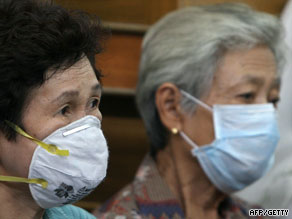
Employment recruiters wear surgical masks as precaution against A(H1N1) virus commonly known as swine flu during a three-day government-sponsored jobs fair Friday June 12, 2009 at Manila's Rizal Park in the Philippines. The World Health Organization declares a Swine Flu pandemic on Friday, the first in 41 years.

first swine flu death--Cases in Japan, Australia

Posted by smallarea at
Share this post:
Ma.gnolia DiggIt! Del.icio.us Yahoo Furl Technorati Reddit


first swine flu death--Cases in Japan, Australia

Health officials in Japan and Australia confirmed the first cases of H1N1 swine flu in each of their countries. The news comes as Costa Rica's Health Minister Maria Luisa Avila announced that country's first death from the virus. The patient, who also suffered from diabetes and chronic lung disease, was one of eight confirmed cases of swine flu to surface in Costa Rica.

Ms. Luisa Avila confirmed that a 53-year-old H1N1 swine-flu patient had died on Saturday "...at 12:20 a.m. from complications of a chronic lung disease." The death marks the first fatality outside of North America.

Mexico has confirmed 48 deaths from swine flu, while two have been confirmed in the United States, and Canadian officials say a woman who died last month had swine flu.
Meantime, WHO officials are gearing up, lest the global outbreak become a pandemic, which could strike up to 2 billion people, one of every three people on the planet. WHO officials have announced plans to produce 1-2 billion doses of H1N1 swine flu vaccine over the next six months.

New flu "unstoppable"

Posted by smallarea at
Share this post:
Ma.gnolia DiggIt! Del.icio.us Yahoo Furl Technorati Reddit

(Reuters) - Saying the new H1N1 virus is "unstoppable", the World Health Organization gave drug makers a full go-ahead to manufacture vaccines against the pandemic influenza strain on Monday and said healthcare workers should be the first to get one.

Every country will need to vaccinate citizens against the swine flu virus and must choose who else would get priority after nurses, doctors and technicians, said Dr. Marie-Paule Kieny, WHO director of the Initiative for Vaccine Research.

Several reports showed the new virus attacks people differently than seasonal flu -- affecting younger people, the severely obese and seemingly healthy adults, and causing disease deep in the lungs.

Kieny briefed reporters on the findings of the WHO's Strategic Advisory Group of Experts on Immunization, or SAGE. "The committee recognized that the H1N1 pandemic ... is unstoppable and therefore that all countries need access to vaccine," Kieney said.

"The SAGE recognized first that healthcare workers should be immunized in all countries in order to retain a functional health system as the virus evolves," she added.

After that, each country should decide who is next in line, based on the virus's unusual behavior.

Seasonal influenza is deadly enough -- each year it is involved in 250,000 to 500,000 deaths globally. But most are the elderly or those with some kind of chronic disease that makes them more vulnerable to flu, such as asthma.

ELDERLY ADVANTAGE

The elderly seem to have some extra immunity to this new H1N1, which is a mixture of two swine viruses, one of which also contains genetic material from birds and humans. It is a very distant cousin of the H1N1 virus that caused the 1918 pandemic that killed 50 million to 100 million people.

A study published in the journal Nature on Monday confirmed that the blood of people born before 1920 carries antibodies to the 1918 strain, suggesting their immune systems remember a childhood infection.

The work by Dr. Yoshihiro Kawaoka also supports other studies that this new H1N1 strain does not stay in the nose and throat, as do most seasonal viruses.

"The H1N1 virus replicates significantly better in the lungs," Kawaoka said. Other studies have also shown it can cause gastrointestinal effects, and that it targets people not usually thought of as being at high risk.

"Obesity has been observed to be one of the risk factors for more severe reaction to H1N1" -- something never before seen, Kieny added. It is not clear if obese people may have undiagnosed health problems that make them susceptible, or if obesity in and of itself is a risk.

On Friday, a team at the U.S. Centers for Disease Control and Prevention and the University of Michigan reported that nine out of 10 patients treated in an intensive care unit there were obese. They also had unusual symptoms such as blood clots in the lungs and multiple organ failure.

None have recovered and three died.

Swine Flu : New flu resembles feared 1918 virus: study

Posted by smallarea at
Share this post:
Ma.gnolia DiggIt! Del.icio.us Yahoo Furl Technorati Reddit

WASHINGTON (Reuters) - The new H1N1 influenza virus bears a disturbing resemblance to the virus strain that caused the 1918 flu pandemic, with a greater ability to infect the lungs than common seasonal flu viruses, researchers reported on Monday.

Tests in several animals confirmed other studies that have shown the new swine flu strain can spread beyond the upper respiratory tract to go deep into the lungs -- making it more likely to cause pneumonia, the international team said.

In addition, they found that people who survived the 1918 pandemic seem to have extra immune protection against the virus, again confirming the work of other researchers.

"When we conducted the experiments in ferrets and monkeys, the seasonal virus did not replicate in the lungs," said Yoshihiro Kawaoka of the University of Wisconsin, who led the study.

The H1N1 virus replicates significantly better in the lungs."

The new swine flu virus has caused the first pandemic of the 21st century, infecting more than a million people, according to estimates, and killing at least 500. The World Health Organization says it is causing mostly moderate disease but Kawaoka said that does not mean it is like seasonal flu.

"There is a misunderstanding about this virus," he said in a statement. "There is clear evidence the virus is different than seasonal influenza."

Writing in the journal Nature, Kawaoka and colleagues noted that the ability to infect the lungs is a characteristic of other pandemic viruses, especially the 1918 virus, which is estimated to have killed between 40 million and 100 million people.

OLD PROTECTION

They tested the virus in blood samples taken from nursing home residents and workers in 1999 in California, Wisconsin, the Netherlands and Japan.

People born before 1920 had a strong antibody response to the new H1N1 virus, meaning their body "remembered" it from infection early in life. This finding supports a study published in Nature in August that also found people who survived the 1918 pandemic still had immune protection against that virus.

Flu viruses change constantly, which is why people can be re-infected and why the vaccine must be changed regularly. Current seasonal strains of H1N1 are distant cousins of both the 1918 pandemic strain and the new H1N1 strain.

"Our findings are a reminder that swine-origin influenza viruses have not yet garnered a place in history, but may still do so, as the pandemic caused by these viruses has the potential to produce a significant impact on human health and the global economy," the researchers wrote.

Other tests showed the virus could be controlled by the antiviral drugs Relenza, made by GlaxoSmithKline, and Tamiflu, made by Roche AG, the researchers said.

The World Health Organization said on Monday that vaccine makers should start making immunizations against H1N1 and that healthcare workers should be first in line to get them.

Companies working on an H1N1 vaccine include Sanofi-Aventis, Novartis AG, Baxter International Inc, GlaxoSmithKline, Solvay and nasal spray maker MedImmune, now part of AstraZeneca.